.png)
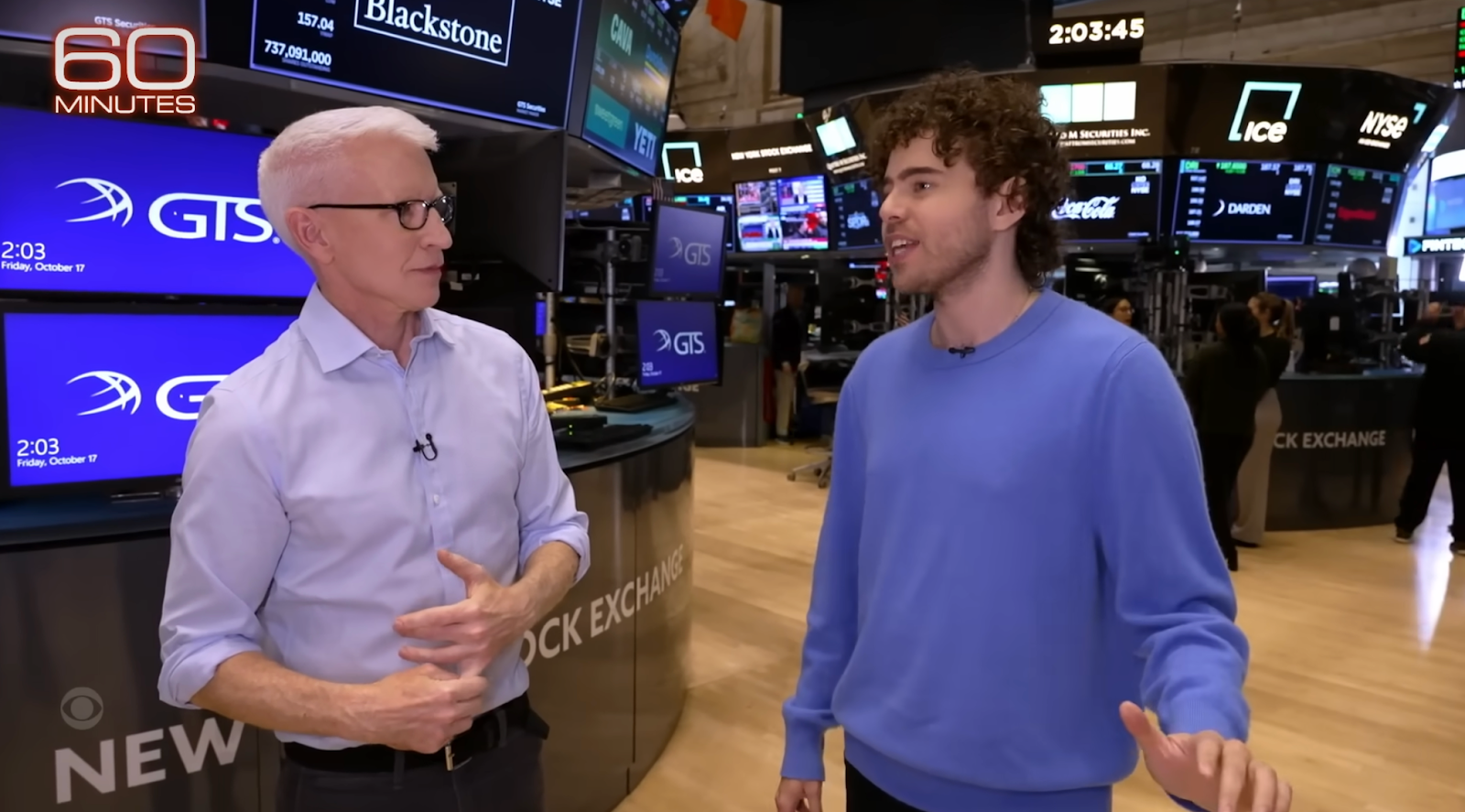
As of December 2025, the prediction market space is heating up with Polymarket and Kalshi leading the charge. Polymarket, the decentralized powerhouse, recently secured a $2 billion investment from Intercontinental Exchange (ICE), the parent of the New York Stock Exchange, pushing its valuation to $9 billion (1). Meanwhile, Kalshi, the regulated U.S. darling, just closed a massive $1 billion Series E round led by Paradigm, catapulting its valuation to $11 billion more than doubling from its $5 billion mark just two months prior (2). These sky-high figures reflect the explosive growth in event-based trading, where users bet on everything from elections and economic data to sports and weather. But with valuations this lofty, how do these platforms stack up? Let's break it down.
Overview of the Platforms
Polymarket, founded in 2020 by Shayne Coplan, is a blockchain-based prediction market that lets users trade shares in event outcomes using crypto. It's decentralized, transparent, and global, drawing in crypto enthusiasts with its permissionless vibe. Trading volumes hit $2.4 billion in November alone, fueled by high-profile events like U.S. elections (3). The platform operates on the Polygon network, enabling fast and low-cost transactions, and has relaunched in the U.S. following CFTC approval in late 2025.
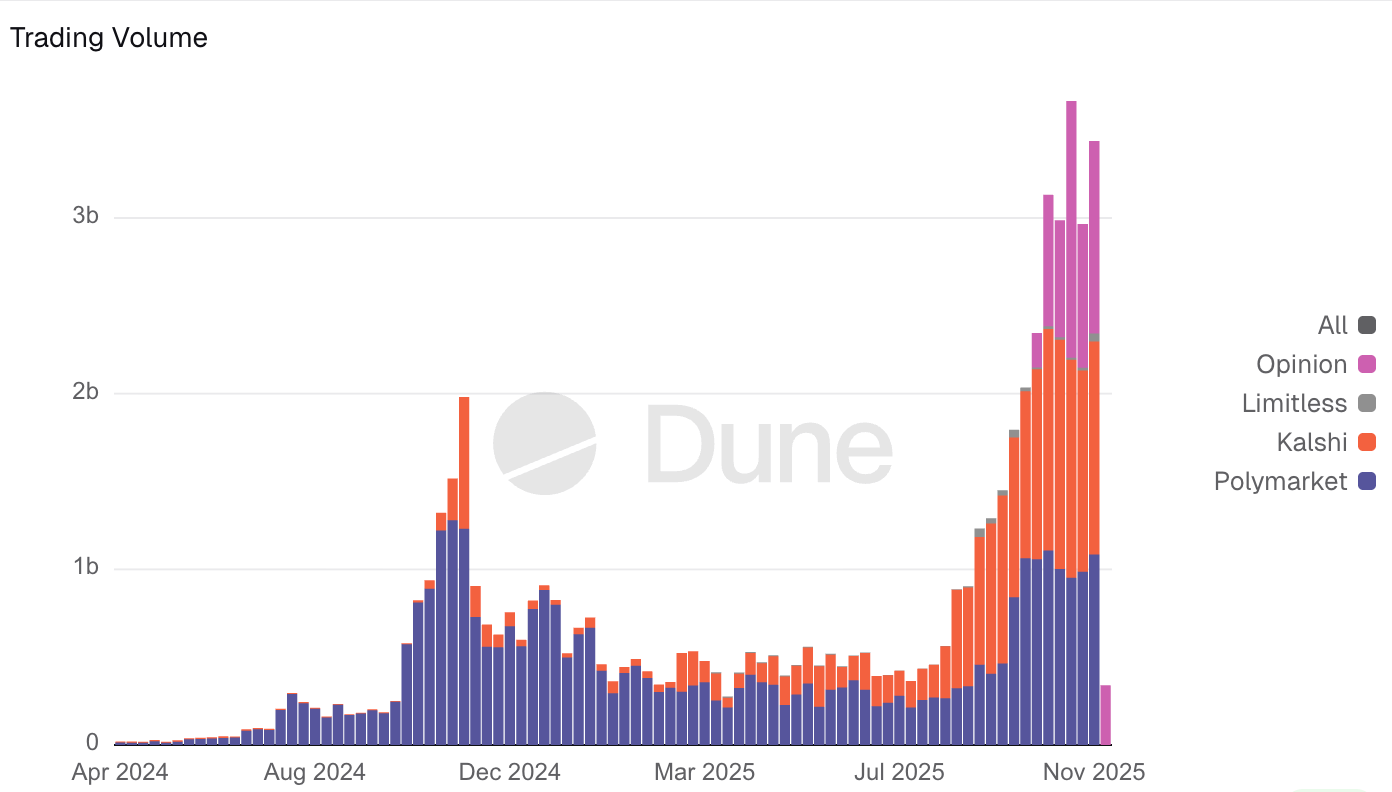
Kalshi, launched in 2021 by Tarek Mansour and Luana Lopes Lara, positions itself as a legitimate financial exchange for "event contracts." It's the first federally regulated prediction market in the U.S., emphasizing compliance and accessibility for everyday traders. November saw Kalshi smash records with $4.54 billion in volume over 1,000% growth from 2024 capturing about 60% market share and edging out Polymarket. Kalshi now holds a commanding 62-65% of total sector volume, up from Polymarket's 95% dominance in late 2024 (4).
Both platforms thrive on the "wisdom of the crowd," turning opinions into tradable assets. But their approaches diverge sharply: Polymarket's crypto roots enable speed and global reach, while Kalshi's regulatory armor appeals to risk-averse U.S. users.
Key Comparison: Features, Regulation, and Users
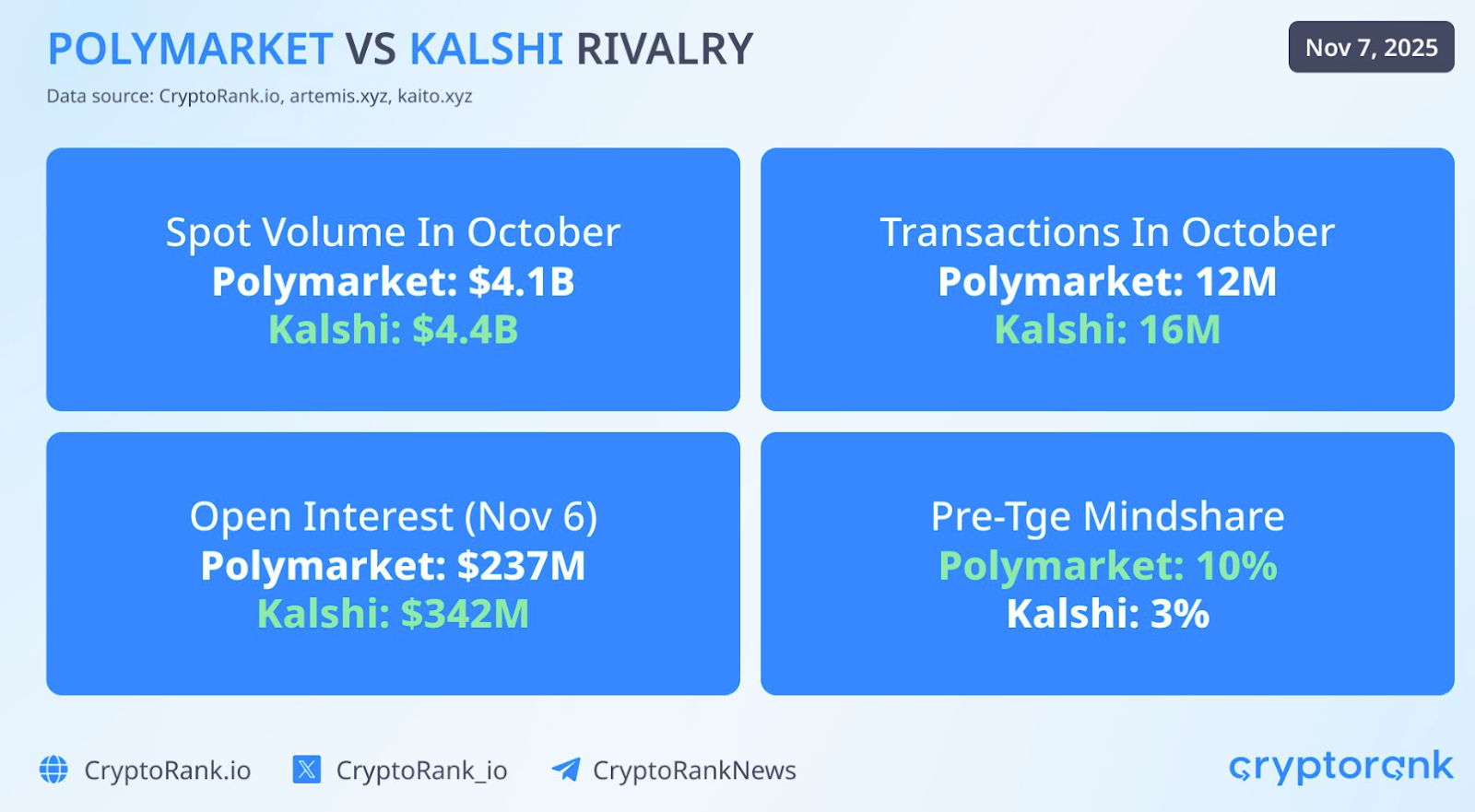
Polymarket stands out with its decentralized model, offering over 60 categories of markets including politics, crypto prices, sports, culture, and finance, with user-generated and long-tail events that allow for quick innovation and niche betting. Trading fees are 0% on buys and sells, with a 2% cut on net profits from wins, and there's no deposit limit, making it ideal for high-volume speculators. Its user base skews toward global crypto-natives and info arbitrageurs, with millions of weekly users and a higher open interest-to-volume ratio of 0.38, indicating longer position holds. On the regulatory front, Polymarket settled a $1.4 million CFTC fine in 2022 and relaunched U.S. operations via a licensed entity in late 2025, adding on-chain transparency, reward campaigns, and leaderboards as unique perks. However, it lacks built-in consumer protections like self-exclusion tools (5).
Kalshi, by contrast, provides a more curated experience with 3,500+ markets focused on high-volume verticals like economics, politics, weather, sports, and corporate earnings. It charges 0% trading fees but a 2% fee on debit deposits, with instant fiat access via debit cards and interest on uninvested cash (6). Its primarily U.S. only user base includes institutional hedgers and retail traders, boasting millions of weekly active users and rapid mainstream adoption through partnerships like CNN integration and Google Finance data feeds. Fully CFTC-designated as a contract market, Kalshi has won court battles for political and sports contracts, ensuring robust compliance with KYC/AML. Unique features include responsible gambling tools such as deposit limits and self-exclusion, though its markets can feel restrictive compared to Polymarket's breadth. User-wise, Polymarket attracts global speculators leveraging its crypto edge for arbitrage across slight pricing differences with Kalshi on identical events. Kalshi draws U.S. professionals hedging portfolios, like betting on CPI data, thanks to its brokerage-like fiat ease. While Polymarket excels in innovation and global scale, Kalshi's regulatory moat provides stability, though state-level challenges over sports betting persist.
Deposits and Withdrawals: Networks and Coins
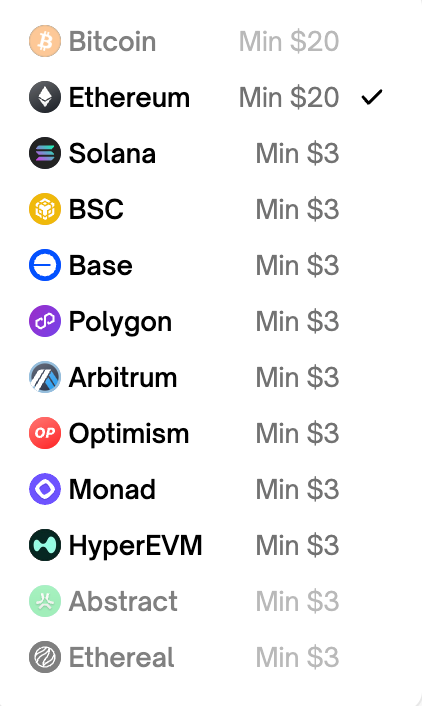
Funding your bets is straightforward on both, but methods reflect their DNA crypto for Polymarket, fiat-first for Kalshi. No platform charges withdrawal fees directly, though network or processor costs apply. Polymarket exclusively accepts USDC (stablecoin) for deposits and withdrawals. The primary network is Polygon for fast, low or no gas fees, with Ethereum as an alternative as one of the many alternatives. Deposits can come from exchanges,wallets or fiat on-ramps via credit/debit cards, with a relayer fee of max ($3 + gas, 0.3% of deposit) (7). Withdrawals go back to your wallet instantly with constraint on the underlying network of choices speed. This crypto-only setup keeps it borderless but exposed to volatile network fees.
Kalshi supports USDC for crypto alongside fiat USD options. Crypto deposits/withdrawals use USDC via partner Zero Hash on Ethereum or Polygon networks, but require a prior crypto deposit to enable withdrawals. Fiat methods include ACH bank transfers (free, 1-3 days), instant debit cards (Visa/Mastercard/Apple Pay/Google Pay), and wires for large sums (8). Withdrawals to the bank take 3-4 days (free), debit is instant (occasional holds), and crypto processes in 30 minutes. Only U.S. banks/cards are accepted, and crypto converts to fiat internally for stability. This hybrid approach suits U.S. users prioritizing ease over borderless access.
The Road Ahead
At $9 billion and $11 billion valuations, Polymarket and Kalshi are neck-and-neck in a race redefining how we forecast the future. Polymarket's blockchain agility could dominate globally if it scales its U.S. relaunch smoothly, potentially through fiat additions and token launches. Kalshi's regulatory moat and mainstream ties, like its new CNN partnership, position it for sustained U.S. growth, with plans to deepen blockchain integration via Solana tokenized predictions. With combined 2025 volumes topping $12 billion, expect more convergence, sharper crowd-sourced insights, better liquidity, and odds. For users, it's a win: whichever you choose, these markets are betting big on tomorrow.
References
- Inside The Deal That Made Polymarket’s Founder One Of The Youngest Billionaires On Earth
- Kalshi raises $1B at $11B valuation after best volume month
- Polymarket Rival Kalshi Becomes CNN's Official Prediction Market Partner As Valuation Touches $11 Billion
- Polymarket vs. Kalshi: The real battle in the prediction markets
- Kalshi Captures 60% Share, Ending Polymarket's Prediction Market Dominance
- Kalshi Vs. Polymarket: Which Prediction Market Is Better?
- Kalshi is the early leader in prediction markets, but its rival Polymarket is worth nearly twice as much. Why?
- Kalshi - Bank Deposits

About Netcoins
Established in 2014 in Vancouver, British Columbia, Netcoins is a registered Restricted Dealer with the provincial securities commissions and a registered Money Services Business (MSB) with FINTRAC. Netcoins is owned by Surge Digital Inc. (formerly BIGG Digital Assets Inc.), a publicly traded company listed on the TSX Venture Exchange (TSXV: SRGE), and complies with applicable public company regulatory.
The information provided in the blog posts on this platform is for educational purposes only. It is not intended to be financial advice or a recommendation to buy, sell, or hold any cryptocurrency. Always do your own research and consult with a professional financial advisor before making any investment decisions. Cryptocurrency investments carry a high degree of risk, including the risk of total loss. The blog posts on this platform are not investment advice and do not guarantee any returns. Any action you take based on the information on our platform is strictly at your own risk. The content of our blog posts reflects the authors’ opinions based on their personal experiences and research. However, the rapidly changing and volatile nature of the cryptocurrency market means that the information and opinions presented may quickly become outdated or irrelevant. Always verify the current state of the market before making any decisions.