Sovereign Wealth Funds and Bitcoin: A New Era of Institutional Adoption
Larry Fink's Bombshell on Sovereign Funds and Bitcoin
In a striking revelation at the New York Times DealBook Summit on December 3, 2025, BlackRock CEO Larry Fink disclosed that sovereign wealth funds (SWFs) are methodically accumulating Bitcoin amid its recent volatility. "I can tell you there are a number of sovereign funds that are adding incrementally at $120,000, $100,000; I know they bought more in the 80s. They’re establishing a longer position... This is not a trade. You own it for a purpose," Fink stated, emphasizing a strategic, multi-year commitment rather than short-term speculation. This comes as Bitcoin dipped below $90,000 from its October peak of $126,000, yet Fink highlighted growing confidence from these trillion-dollar state-backed investors, signaling Bitcoin's maturation beyond mere speculation.
Fink's comments underscore a pivotal shift: SWFs, the guardians of national wealth, are viewing Bitcoin not as a fleeting trend but as a hedge against global economic pressures like inflation and currency debasement. With total SWF assets exceeding $14 trillion globally in 2025,(1) even modest allocations could reshape Bitcoin's trajectory. This article explores SWFs' role in finance, why Bitcoin aligns with their strategies, and the transformative potential of their adoption.
Demystifying Sovereign Wealth Funds: The Giants of Global
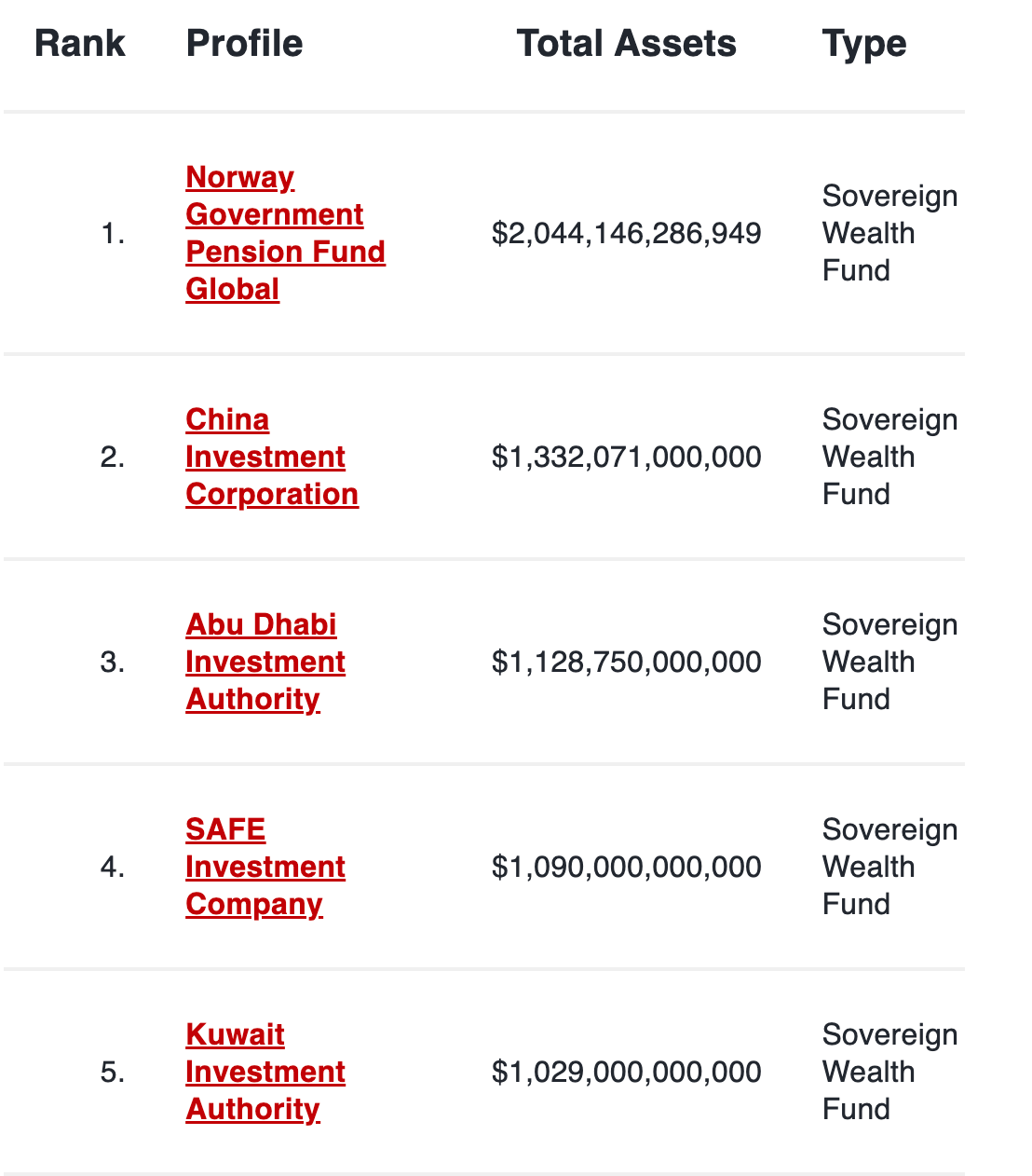
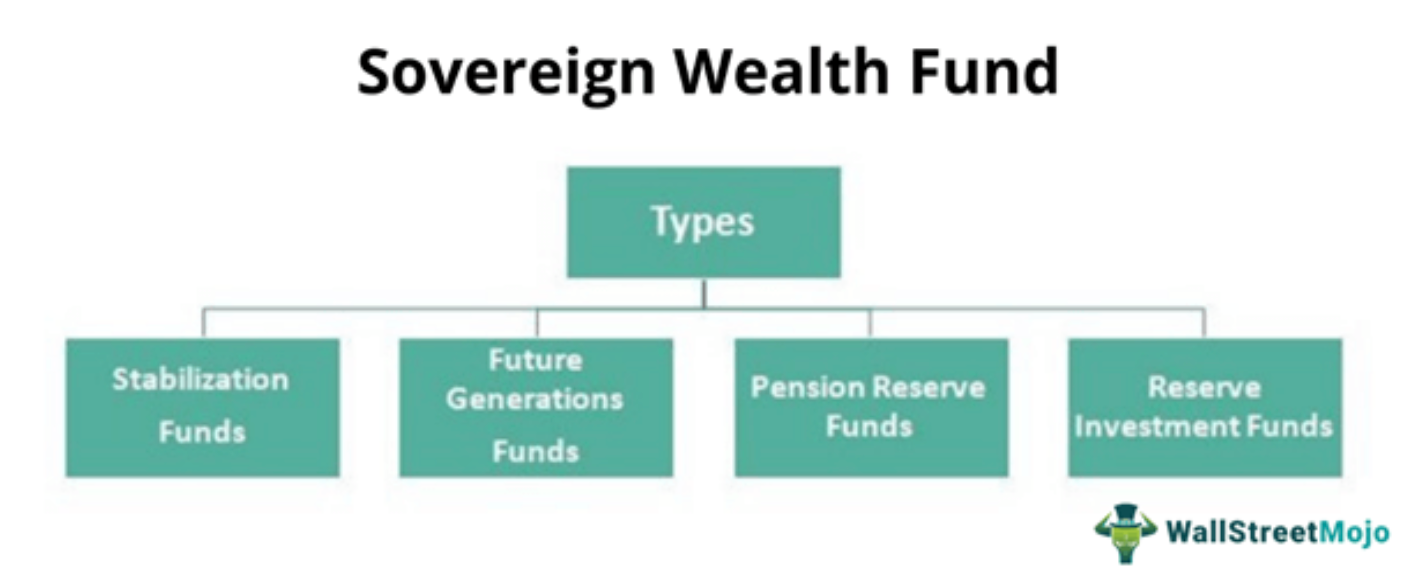
Sovereign wealth funds are state-owned investment vehicles designed to manage surplus revenues often from commodities like oil or fiscal surpluses for long-term returns, intergenerational equity, and economic stabilization. Emerging in the 1950s, with Kuwait's Investment Authority founded in 1953, SWFs exploded post-2000s commodity boom, now managing over $14 trillion in assets under management (AUM) worldwide as of mid-2025 (2).
Key players dominate this landscape. Norway's Government Pension Fund Global, the world's largest, oversees $2.04 trillion AUM, primarily from oil revenues, with a focus on sustainable global equities. Abu Dhabi's Mubadala Investment Company manages $330 billion, blending public and private assets for UAE diversification. Saudi Arabia's Public Investment Fund (PIF) commands $925 billion, fueling Vision 2030 through domestic megaprojects and international ventures.Emerging funds like Luxembourg's Intergenerational Sovereign Wealth Fund (FSIL), with €764 million AUM (~$887 million), pioneer innovative strategies in Europe (3).
SWFs' philosophy prioritizes diversification and risk-adjusted returns, with traditional allocations heavy in equities (40–60%), fixed income, real estate, and alternatives like private equity. Yet, as global uncertainties mount, these funds are evolving toward uncorrelated assets to safeguard against traditional market vulnerabilities.
The Strategic Imperative: Why Sovereign Funds Are Eyeing Alternatives Like Bitcoin
Rising global debt, projected to exceed $100 trillion by 2026 per IMF estimates, (4) alongside persistent inflation and currency risks, compels SWFs to seek hedges beyond conventional portfolios. Commodity-backed funds, drawing parallels to gold's 2–5% allocations as "safe-haven" insurance, now eye Bitcoin's scarcity (21 million cap) and decentralization as "digital gold."
SWF allocations to alternatives have surged 20% since 2020, per Invesco's Global Sovereign Asset Management Study, reflecting a push for higher yields amid low-interest environments. Regulatory green lights, like the U.S. SEC's 2024 approval of spot Bitcoin ETFs including BlackRock's iShares Bitcoin Trust (IBIT), enable compliant access. Bitcoin's low correlation to stocks (0.2–0.3) and bonds (0.1) in 2025 data offers ballast during fiat crises, as seen post-2022 inflation (5).
Challenges persist: volatility, ESG concerns over proof-of-work energy use, and geopolitical tensions. However, gradual "dollar-cost averaging” as evidenced by recent dips mitigates risks, positioning Bitcoin as a modern portfolio enhancer.
Bitcoin's Unique Fit: From Fringe Asset to Sovereign Reserve
Bitcoin's attributes: fixed supply, borderless transfer, and no counterparty risk resonate with SWF mandates for value preservation. Unlike fiat, its decentralization shields against central bank policies, while potential ecosystem yields (staking) add appeal.
Ownership purposes include:
- Diversification and Risk Mitigation: Bitcoin's 0.1–0.3 beta to global markets provides stability amid fiat erosion, echoing Norway's oil-to-sustainability pivot (6).
- Long-Term Value Preservation: As a debasement hedge, it mirrors gold's role, with SWFs like Mubadala viewing it as complementary to traditional reserves (7)
- Strategic Innovation: Exposure taps blockchain trends; Fink notes tokenization could accelerate "faster than most expect," unlocking trillions in illiquid assets.
- Geopolitical Edge: Middle Eastern funds see Bitcoin as energy-linked (via mining) and a dollar-alternative, countering U.S. dominance. (8)
Even 1–2% SWF allocations could inject $120–240 billion, per 2025 projections, amplifying Bitcoin's legitimacy. Fink's January Davos forecast of $700,000 with 2–5% commitments underscores this potential (9).
Real-World Momentum: Sovereign Funds Already in the Game
Momentum is building, with case studies illuminating SWF strategies:
- Abu Dhabi's Mubadala: Disclosed $567 million in IBIT holdings end-Q3 2025, adding during dips to hedge oil dependency; total UAE exposure via ETFs nears $1 billion (10).
- Luxembourg's FSIL: Allocated 1% (~€7 million/$9 million) to Bitcoin ETFs in 2025, Europe's crypto pioneer under revised policy allowing 15% alternatives (11).
- Others: Saudi PIF explores proxies; Qatar and Singapore test waters, with whispers of broader Gulf commitments (12).
Bitcoin's Sovereign Seal of Approval
Fink's disclosure of SWF incremental buys cements Bitcoin's legitimacy, evolving it from fringe to strategic reserve. As these wealth stewards embrace BTC for diversification and hedging, it redefines global finance—prompting a race to digitize before competitors surge ahead. For deeper dives: SWF Institute reports, BlackRock ETF filings, and institutional flow trackers.
References
- Sovereign Wealth Funds: Global trends and the UK’s role in the evolving landscape for Sovereign Investment Vehicles
- Top 100 Largest Sovereign Wealth Fund Rankings by Total Assets
- Luxembourg Sovereign Wealth Fund Allocates 1% to Bitcoin ETFs, May Signal Strategic Shift
- Invesco Global Sovereign Asset Management Study
- Bitcoin vs US Equities Correlation
- Preqin Report
- Abu Dhabi Fund Tripled Bitcoin Bet in Months Before Crypto Crash
- Abu Dhabi Fund Tripled Bitcoin Bet in Months Before Crypto Crash
- BlackRock's CEO is bullish on the leading cryptocurrency even as Bitcoin has lost some ground
- Abu Dhabi Tripled Its Bitcoin Bet In Q3 Before the Crypto Market Crash
- Luxembourg Claims Bragging Rights as First Eurozone Nation to Invest in Bitcoin
- Larry Fink, Sovereign Wealth Funds, and the “Case Study” of Bitcoin ETFs: What Signals Are Emerging for the Market?

About Netcoins
Established in 2014 in Vancouver, British Columbia, Netcoins is a registered Restricted Dealer with the provincial securities commissions and a registered Money Services Business (MSB) with FINTRAC. Netcoins is owned by Surge Digital Inc. (formerly BIGG Digital Assets Inc.), a publicly traded company listed on the TSX Venture Exchange (TSXV: SRGE), and complies with applicable public company regulatory.
The information provided in the blog posts on this platform is for educational purposes only. It is not intended to be financial advice or a recommendation to buy, sell, or hold any cryptocurrency. Always do your own research and consult with a professional financial advisor before making any investment decisions. Cryptocurrency investments carry a high degree of risk, including the risk of total loss. The blog posts on this platform are not investment advice and do not guarantee any returns. Any action you take based on the information on our platform is strictly at your own risk. The content of our blog posts reflects the authors’ opinions based on their personal experiences and research. However, the rapidly changing and volatile nature of the cryptocurrency market means that the information and opinions presented may quickly become outdated or irrelevant. Always verify the current state of the market before making any decisions.
.png)